
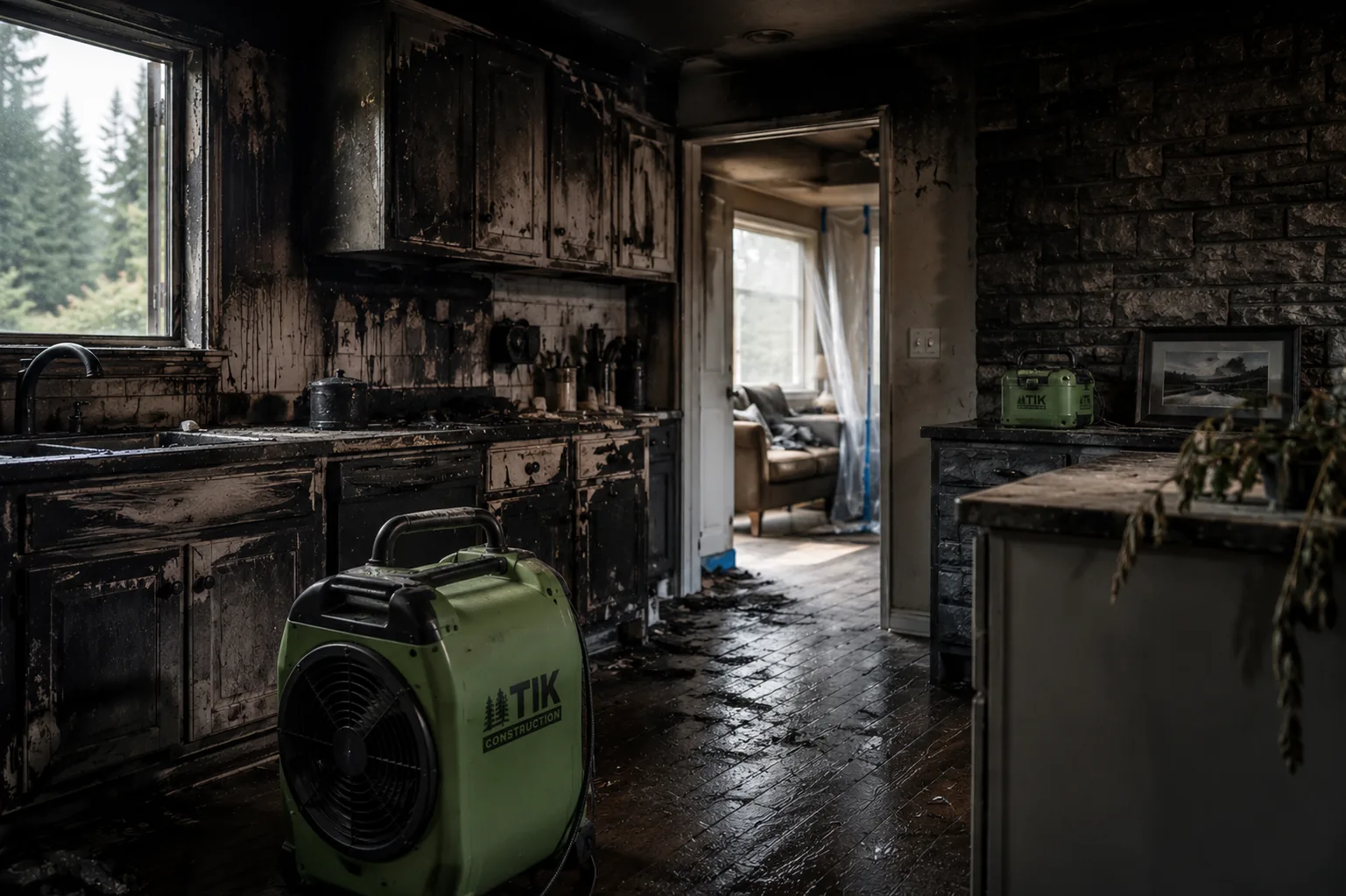
Fire Damage Restoration in Milwaukie, OR: what we see locally
Milwaukie was founded in 1847 on the banks of the Willamette River and incorporated in 1903 — old enough to predate most of the Portland suburbs around it, and known locally as the Dogwood City of the West. Around 21,600 residents live in a compact Clackamas County city wedged between the Willamette River and the Portland city line, with the MAX Orange Line light rail (opened 2015) running through downtown and driving a wave of transit-corridor redevelopment.
Housing stock splits by era and distance from the river. Downtown and the older neighborhoods closest to the Willamette — historic farmhouses and Craftsman-era bungalows — date to the early 1900s, with original plumbing and wiring that shows up during restoration work. Ardenwald and Hector Campbell, further from downtown, are mostly post-war construction. Areas farther east carry 1970s–80s ranch-style homes on larger lots, and the downtown transit corridor has added new multifamily and townhome construction since the MAX line opened.
Two creeks define Milwaukie's water exposure in a way that's different from drier hillside suburbs nearby. Kellogg Creek — named for the water-powered grist mill built along it in the 1850s — runs through downtown to its confluence with the Willamette at Riverfront Park, and flood risk along its banks is a recognized constraint on nearby buildable land. Johnson Creek forms much of the city's northern edge (the Ardenwald-Johnson Creek area straddles the Milwaukie/Portland line) and is well known regionally for overflowing its banks during sustained winter storms.
Typical fire damage restoration scenario in Milwaukie: Most Milwaukie fire calls are kitchen fires in the older bungalow and farmhouse stock near downtown, where original electrical panels haven't always been upgraded, plus occasional incidents in the newer multifamily buildings along the MAX corridor.