
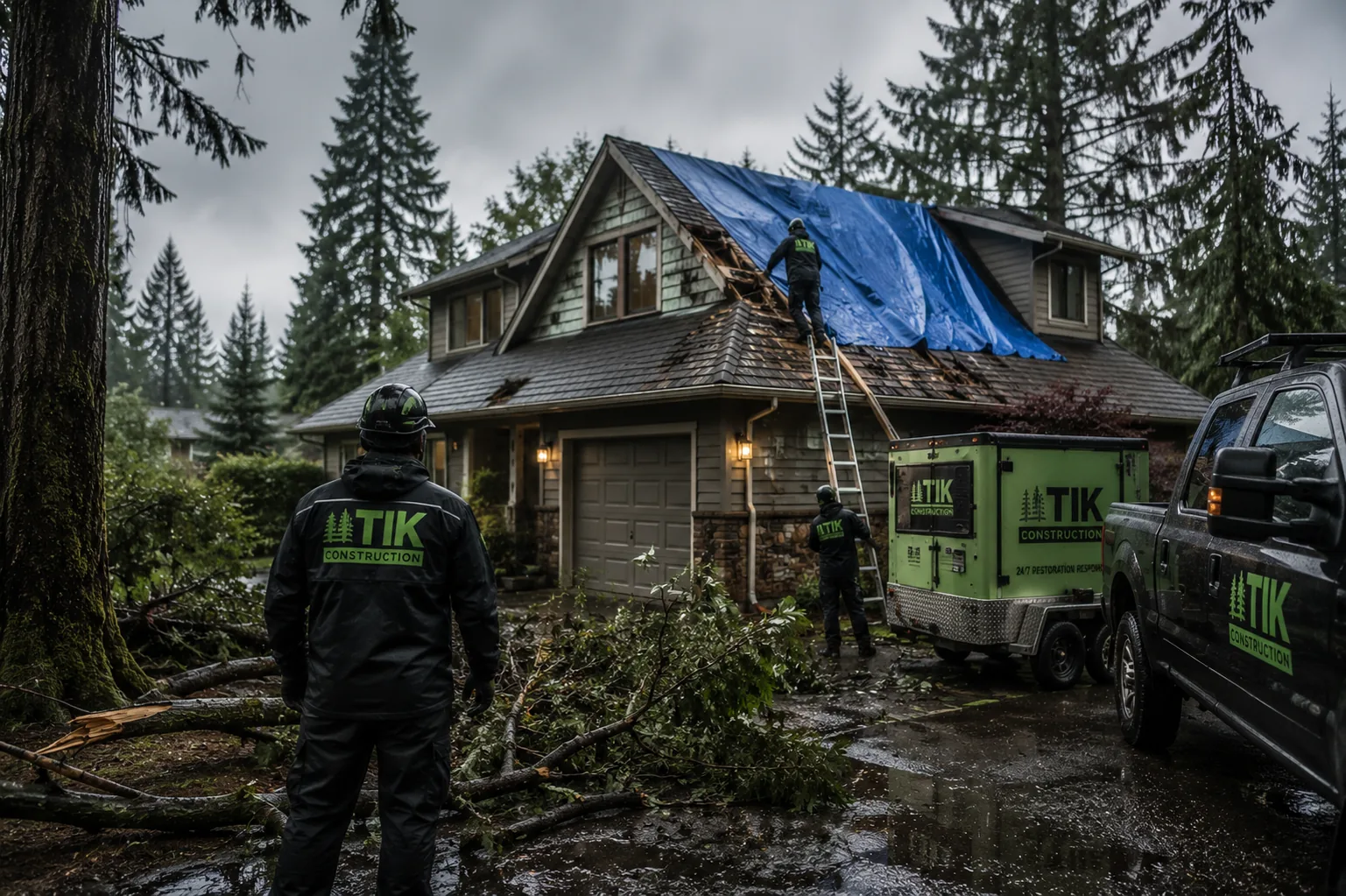
Storm Damage Restoration in Oregon City, OR: what we see locally
Oregon City sits at Willamette Falls, at the south end of the Portland metro in Clackamas County, where it's served as the county seat since the 1840s. Around 38,000 residents live across two distinct elevations connected by the Oregon City Municipal Elevator — one of only a handful of public street-to-bluff elevators left in the country, built to link the historic riverside downtown with the residential bluff above it.
Housing stock splits sharply by elevation and era. Downtown and Canemah, down along the river, hold some of the oldest housing in the metro — Victorian and early-1900s homes on narrow lots, many with original plumbing and knob-and-tube wiring remnants that show up during restoration work. The Bluff neighborhoods above, reached by the elevator or the McLoughlin Promenade stairs, are mostly mid-20th-century construction. Further south and east, the Beavercreek Road and Redland corridors carry newer subdivisions built from the 1990s through the 2010s as the city has grown.
The Willamette River and Abernethy Creek both run through the city, and the historic downtown sits close to river grade, which means older riverside and low-lying properties see more groundwater and seasonal drainage exposure during Pacific Northwest wet-season rain than the newer subdivisions built higher up on the bluff and toward Beavercreek Road.
Typical storm damage restoration scenario in Oregon City: Oregon City's bluff-and-river terrain means wind events hit differently by elevation — mature trees on the upper bluff neighborhoods come down on roofs and driveways, while the low-lying downtown and Canemah occasionally see storm water compound with river-adjacent drainage during heavy rain.